

Nous Research's Hermes Agent Becomes an Extensible Platform With a Plugin SDK
Nous Research ships the first official Hermes Desktop plugin — a native Kanban board — alongside a full SDK for building your own desktop extensions

- First official desktop plugin: Nous Research ships a native Kanban board for Hermes Desktop, previously only accessible via CLI or browser dashboard.
- Plugin SDK released: The @hermes/plugin-sdk lets anyone add pages, panes, sidebar nav, status bar items, keybinds, themes, and backend endpoints with a single ESM file.
- Zero build step: Drop a
plugin.jsfile into$HERMES_HOME/desktop-plugins/and the app hot-reloads it within seconds — no repo clone or build tooling required. - Agents can write plugins: A bundled
hermes-desktop-pluginsskill lets the agent itself author and install desktop plugins on your behalf. - Python backend support: Plugins can ship a
plugin_api.pyFastAPI router, scoped to their own namespace under/api/plugins/<id>/, with REST and WebSocket access. - Reference examples available: The hermes-example-plugins repo provides minimal, copyable demos for each plugin surface.
Hermes Agent, the open-source autonomous agent framework from Nous Research, just took a meaningful step toward becoming a full platform. The team shipped the first official desktop plugin , a native Kanban board , and simultaneously released the Desktop Plugin SDK that lets anyone build their own. This is the moment Hermes stops being a single app and starts being an extensible shell.
Why Kanban, and why now
The Kanban board is a powerful tool for multi-agent workflows, but its separation from the desktop app created real friction: switching between the chat interface and the board required opening a separate terminal, manually running commands, and copying task IDs between apps , disrupting focus and slowing down workflows that depend on real-time task coordination. The community noticed, filed the request, and Nous Research delivered it as the SDK's launch demo.
The Kanban system provides a structured interface for both AI agents and human users to coordinate complex, multi-step tasks. While the core logic resides in a shared SQLite database, the system exposes two primary interaction layers: a tool-calling interface for agents to manage their own lifecycles and an interactive board for human oversight and manual manipulation. Moving it into the desktop app means you can watch agents work, drag cards, and unblock tasks without ever leaving the window.
What the Plugin SDK actually is
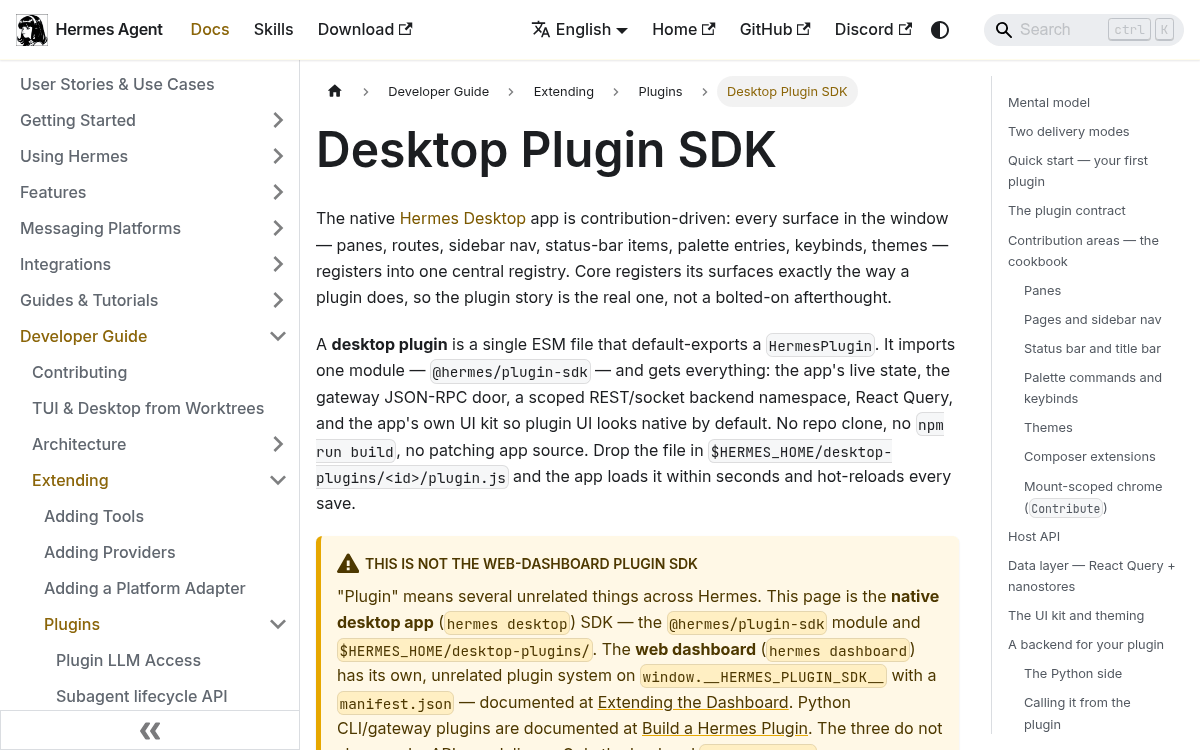
A desktop plugin is a single ESM file that default-exports a HermesPlugin. It imports one module , @hermes/plugin-sdk , and gets everything: the app's live state, the gateway JSON-RPC door, a scoped REST/socket backend namespace, React Query, and the app's own UI kit so plugin UI looks native by default. No repo clone, no npm run build, no patching app source. Drop the file in $HERMES_HOME/desktop-plugins/<id>/plugin.js and the app loads it within seconds and hot-reloads every save.