

Loft Orbital's Yam-9 Runs Google DeepMind's Gemma 3 Directly in Space
NASA's JPL ran Google's Gemma 3 vision-language model aboard a Loft Orbital satellite, marking the first time a VLM has ever analyzed imagery autonomously in space.
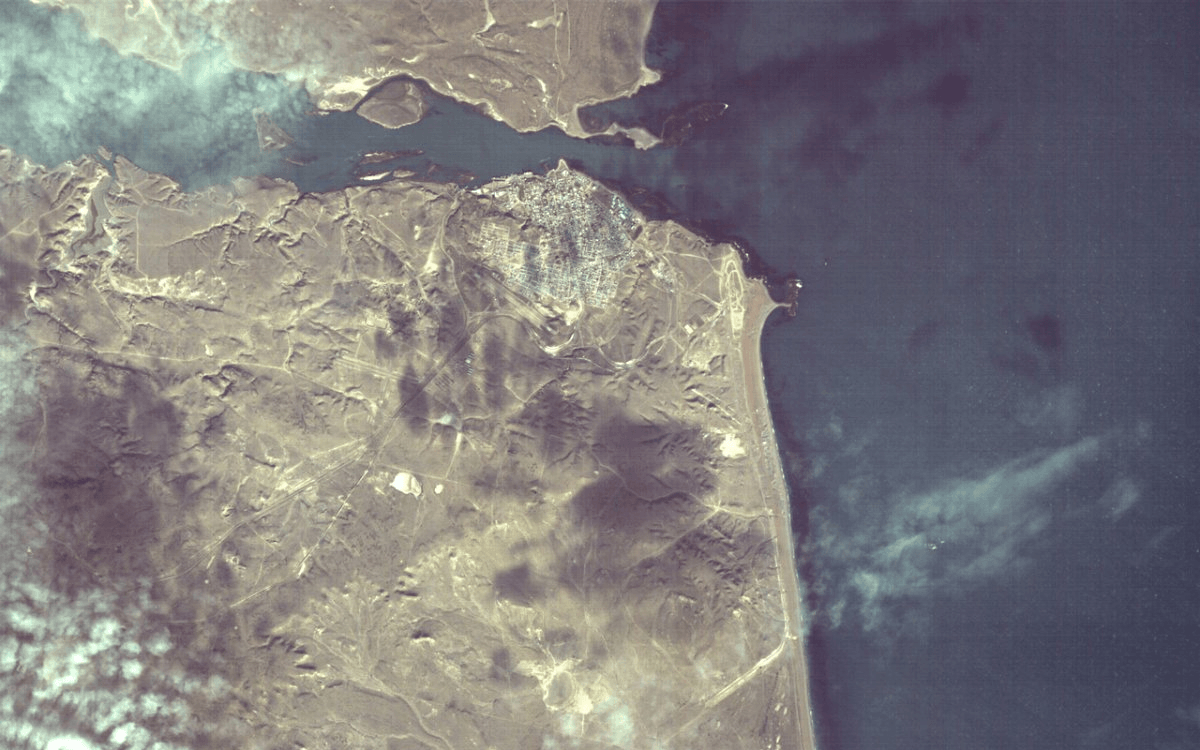
- NASA JPL's NAVI-Orbital software ran Google DeepMind's Gemma 3 VLM aboard Loft Orbital's Yam-9 satellite — the first vision-language model ever deployed in orbit.
- The satellite autonomously answered natural language queries and classified Earth imagery without downlinking raw data to the ground first.
- The hardware stack: an Nvidia Jetson Orin AGX GPU running an off-the-shelf Gemma 3 model, adapted by JPL engineers to fit satellite memory constraints.
- Use cases include border monitoring, railway infrastructure detection, agricultural surveillance, and eventually AI assistants for astronauts on the Moon or Mars.
- Loft Orbital has a defense deal with Helsing for real-time military situational awareness; full Earth coverage would require 50–100 satellites (Loft currently operates 12).
- Kepler Communications is running 40 Nvidia GPUs across 10 satellites in orbit, with undisclosed VLM use cases already underway.
For decades, Earth observation satellites have operated on a simple and expensive loop: take photos, beam them down, and let humans sort through the mess. That loop just broke. In April, Loft Orbital's Yam-9 satellite became the first spacecraft to autonomously identify targets in orbit using a vision-language model (VLM) , a type of AI that combines image understanding with the reasoning of a large language model. No analyst in the loop. No raw data downlinked first. The satellite just... figured it out.
What actually happened up there
The milestone occurred in April and marks the first reported use of a vision-language model in orbit. The Yam-9 satellite ran a software package from NASA's Jet Propulsion Laboratory called NAVI-Orbital, which hosted Google DeepMind's Gemma 3 VLM. Aboard the spacecraft, Gemma 3 answered natural language queries, classified Earth imagery, and produced plain-English summaries of what it found , without transmitting a single raw pixel to the ground first.
A VLM, for context, is a model that can take both an image and a text prompt as input and reason about them together. Think of it as giving a satellite eyes and the ability to understand instructions like "find me railway infrastructure" rather than just capturing everything and hoping someone on the ground notices what matters.
Researchers asked the model to classify sensor data where natural environment meets human development, or to detect infrastructure around railway hubs , and it handled it. The team used LangGraph for agent orchestration and Gemma 3 to generate short English summaries right from space.
The stack that made it fly
This wasn't a custom space-grade AI built from scratch. The engineering challenge was about compression and adaptation, not invention.
- Model: Gemma 3 from Google DeepMind, an open-weights VLM available in sizes from 1B to 27B parameters, purpose-built for edge deployment
- Hardware: Yam-9 includes an Nvidia Jetson Orin AGX GPU, one of the leading chips used in space compute
- Software harness: NAVI-Orbital, developed by Juan Delfa Victoria, a technical leader in NASA JPL's AI group
- Orchestration: LangGraph for chaining the agent's reasoning steps
- Key adaptation: While Gemma 3 is off the shelf, software engineers had to streamline the software package to reduce the amount of libraries and memory it would require
Gemma 3 features a custom SigLIP vision encoder for image understanding, a 128k context window for long-form tasks, and efficient local-global attention for faster inference and memory savings. Available in 270M, 1B, 4B, 12B, and 27B parameter sizes, the models excel in tasks like question answering, summarization, and reasoning, while their compact design allows deployment on resource-limited devices. The satellite's constraints made the smallest viable multimodal variant the obvious choice , and it still delivered.
Why this is bigger than one demo
Typically, satellites capture vast amounts of imagery and beam it down to Earth, where analysts spend hours or days sifting through the data. That bottleneck is both a latency problem and a bandwidth problem. Most of what a satellite captures is clouds, ocean, and empty land. Downlinking all of it wastes precious communication windows and buries the signal in noise.
On-orbit inference flips this model. Instead of sending everything down and filtering on the ground, the satellite filters first and only reports what matters. A satellite that can autonomously classify and prioritize its own imagery is worth more per orbit than one that generates undifferentiated raw data.
Loft's head of AI, Paul Lasserre, put it plainly: "It opens the door to always-on, patrol layers in space. If you have a VLM, you can have logic , like 'monitor this border for me, and let me know when something is suspicious,' and interact back and forth with the satellites."
Who benefits and how
The practical use cases span a wide range of industries:
- Defense and intelligence: Loft has a strategic agreement with Helsing, the European defense AI company, to deploy a multi-sensor satellite constellation delivering real-time situational awareness for governmental and military customers.
- Agriculture and environment: Agricultural monitoring firms, environmental watchdogs, and maritime domain awareness operators all benefit from faster triage and smaller downlink volumes.
- Astronaut assistance: The idea for NAVI-Space began with JPL researcher Taran Cyriac John thinking about digital assistants for astronauts on the Moon or Mars , hands-free AI that responds to voice queries while wearing a pressurized suit.
Companies that deploy orbital inference capability own the layer that controls what their customers can ask of their satellites , a new kind of competitive moat in the Earth-observation market.
The broader race for orbital compute
Yam-9 didn't emerge in a vacuum. There's a quiet arms race forming around compute in orbit.
The largest compute cluster currently in orbit was launched by Canada's Kepler Communications, boasting about 40 Nvidia Orin edge processors onboard 10 operational satellites, all linked together by laser communications links. Kepler declined to say whether it had deployed VLMs in orbit due to NDA agreements with partners, but acknowledged "several undisclosed use cases" of its compute environment since those spacecraft launched in January.
Planet Labs, which also flies satellites with Jetson Orin processors, is currently using them for simpler object detection but has research underway on VLMs. The direction of travel is clear even if the exact timeline isn't.
Loft says full real-time coverage of Earth would take 50 to 100 satellites like Yam-9, and it currently operates 12. The gap between proof-of-concept and planetary-scale coverage is still large , but the proof-of-concept is now real.
What assumptions need updating
This demonstration quietly invalidates a few things the field has taken for granted:
- "Edge" meant phones and IoT devices. Gemma 3 was designed for mobile and embedded deployment. It now runs in low Earth orbit. The definition of edge just expanded by 400 kilometers.
- Satellite value was in raw data volume. A satellite that can autonomously classify and prioritize its own imagery is worth more per orbit than one that generates undifferentiated raw data. The business model of Earth observation is shifting from data delivery to insight delivery.
- Space AI required custom hardware. Gemma 3 is off the shelf. The main engineering work was software adaptation , stripping libraries, managing memory. That's a much lower barrier than building radiation-hardened custom silicon.
- Ground-based analysis was the only option. The demonstration offers a glimpse of how AI could fundamentally change what space-based sensors are capable of , and how much they're worth.
The lessons from squeezing Gemma 3 into a satellite's memory budget will directly inform how the industry scales up. Power management, memory constraints, and thermal limits in orbit are now active engineering problems for the ML community, not just aerospace engineers. The gap between a model that runs on your laptop and one that runs 400km above it just got a lot smaller.
Comments
