


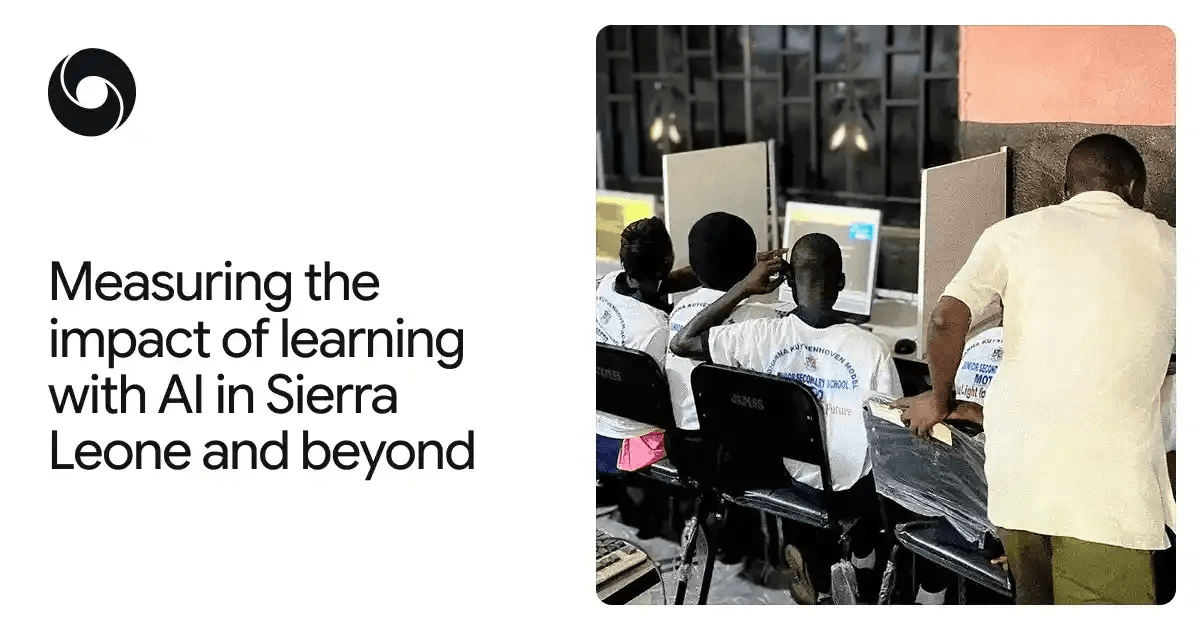
The debate around AI in education has mostly been theoretical. Does it help students learn, or does it just help them cheat? Google DeepMind just published hard evidence from one of the most resource-constrained classrooms on earth, and the results are striking.
Google DeepMind has shared results from a randomized controlled trial (RCT) conducted in partnership with Fab AI and with the support of the Sierra Leone Ministry of Education. Over eight weeks, the team evaluated how Gemini's Guided Learning feature affected the math progress of 1,763 junior secondary students across 12 schools in Port Loko District, Sierra Leone. The trial also received support from Google.org and the Gates Foundation, with EducAid, Laterite, and Oxford MeasurEd collaborating on implementation and data collection.
Why Sierra Leone?
UNESCO projects that 44 million additional teachers are needed globally by 2030 to achieve universal primary and secondary education, with Sub-Saharan Africa accounting for the largest share of the gap at 15 million. Sierra Leone sits squarely in that crisis. The shortage is driven by a combination of factors including increased student enrollment, lack of resources, slow teacher recruitment, high attrition rates due to brain drain, and poor working conditions. This is not a market where you can simply hire more teachers. The question is whether technology can fill the gap without sacrificing quality.


Don't miss what's next in AI
Join 300,000+ engineers and researchers who get the signal, not the noise.
- Full access to in-depth AI research breakdowns
- Be the first to know what's trending before it hits mainstream
- Daily curated papers, repos, and industry moves