

Cursor's Origin Takes on GitHub With AI Agent-Scale Git Hosting
Cursor announces Origin, an agent-native Git hosting platform built to handle the throughput demands of parallel AI agents, taking direct aim at GitHub

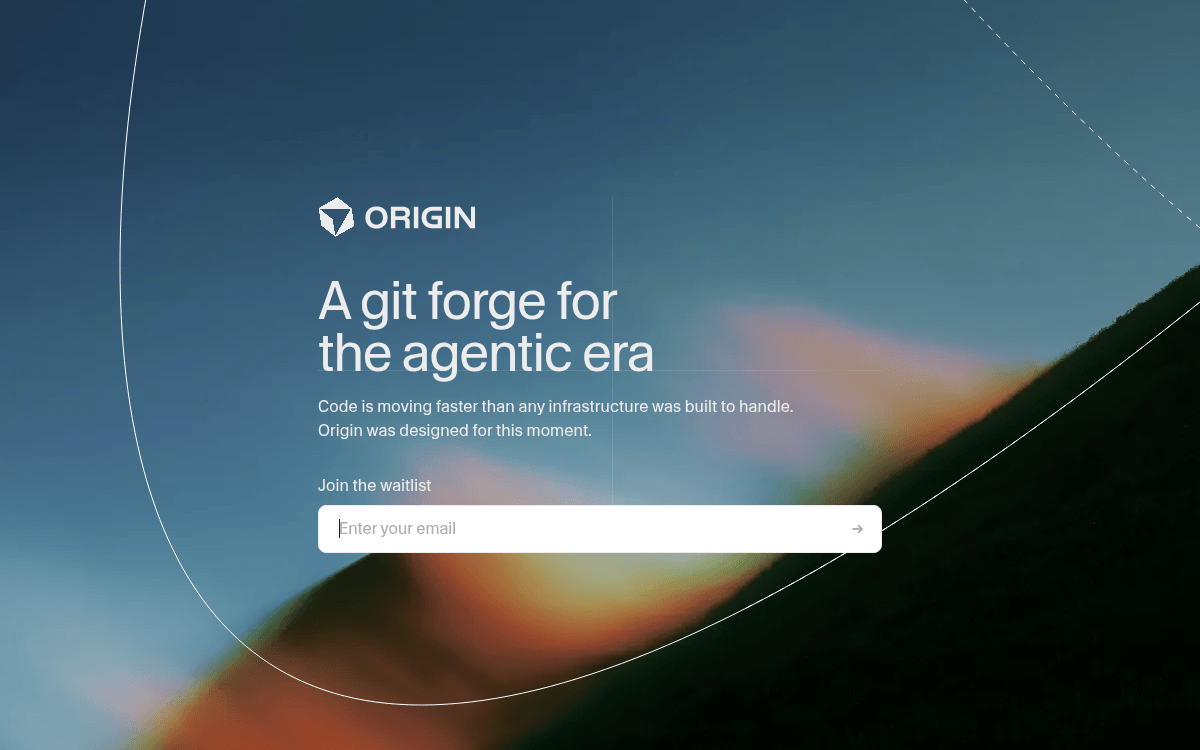
- Cursor announces Origin, a Git hosting platform built for AI agent workloads, directly competing with GitHub. Join the waitlist.
- Agent-scale throughput: Live demo showed 22.6 commits per second in a single repo, plus hundreds of thousands of clones and pushes per hour.
- Graphite acquisition pays off: Origin is led by engineers from Graphite, the code-review startup Cursor acquired for well above its $290M valuation in late 2025.
- GitHub's bad timing: GitHub has suffered 48 major outages in 12 months and a breach of ~3,800 internal repositories, weakening its position ahead of this challenge.
- Full-stack ambition: Origin completes Cursor's vertical stack -- editor, cloud agents, code review (Graphite), and now hosting -- all under one roof.
- Fall 2026 launch window confirmed; pricing and enterprise terms not yet disclosed. Cursor is backed by $2.3B raised and a $60B xAI acquisition option.
Cursor just announced it is building a Git forge from scratch. Called Origin, it is a full code storage and hosting platform, a direct competitor to GitHub, designed from the ground up for a world where AI agents are doing most of the committing. The waitlist is open now, with a fall release window.
The problem with Git at agent scale
Git was designed for humans. A developer opens a branch, writes some code over a few hours, opens a pull request, and waits for review. That cadence is measured in hours and days. AI agents work differently: dozens or hundreds of them can be cloning, branching, committing, and rebasing the same codebase simultaneously, in seconds.
Origin is built around the assumption that lots of AI agents will be cloning, branching, committing, rebasing, reviewing, and fixing failures in parallel. That is a fundamentally different load profile than anything GitHub was architected to handle. GitHub was built for human-scale development, and Origin is being framed around the next bottleneck: coordinating, reviewing, and safely merging agent-generated code at massive scale.
The demo numbers Cursor showed on stage made the ambition concrete. Live demo numbers showed 22.6 commits per second inside one repo, plus hundreds of thousands of clones and pushes hourly -- throughput that would stress any existing Git hosting infrastructure.
The Graphite piece that makes this click
Origin did not appear out of nowhere. The engineering team behind it came from Graphite, a code review startup Cursor acquired. Founded by Merrill Lutsky, Greg Foster, and Tomas Reimers, Graphite is known for its "stacked pull request" workflow, which allows developers to manage multiple dependent code changes in parallel. Tomas Reimers was the one on stage demoing Origin.
Cursor acquired Graphite, a New York-based AI code review startup, aiming to integrate Graphite's tools into Cursor's platform to create a comprehensive software development workflow. Cursor paid a figure substantially exceeding Graphite's last valuation of $290 million. The acquisition now reads as a deliberate land-grab for the talent and technology needed to build Origin.
The logic stacks cleanly. Graphite brings stacked PRs, review flow, merge queues, and cleaner collaboration. Origin adds the hosting layer underneath it. Together they give Cursor a complete software factory: write in the editor, run agents in parallel, review with Graphite-style workflows, and host everything on Origin.
GitHub's very bad year
The timing of this announcement is not accidental. GitHub has had a rough stretch that has visibly eroded developer trust. In the past 12 months, GitHub has experienced 48 major outages, including outages in GitHub Actions, Copilot, Pull Requests, and core Git operations. HashiCorp co-founder Mitchell Hashimoto pulled his Ghostty project from GitHub after 18 years of using the platform, saying that GitHub "is no longer a place for serious work."
The reliability issues were compounded by a security incident. GitHub confirmed a breach in May 2026, attributing the compromise to a poisoned VS Code extension that ran on an employee's machine and gave attackers a foothold inside Microsoft's flagship developer platform. Threat actors exfiltrated approximately 3,800 internal repositories during the breach. For a platform that sells itself as the safe home for the world's code, that is a damaging narrative to carry into a competitive fight.
GitHub leadership has grown concerned about competitive threats from Cursor and Anthropic as the platform faces recent outages and operational issues.
Cursor's bigger play
Origin is the latest move in what has become a systematic effort by Cursor to own the entire developer workflow. Cursor has established itself as the leading AI-assisted coding platform, closing 2025 with a $29.3 billion valuation and $1 billion in annualized revenue, and is pursuing an aggressive acquisition strategy to control the entire software development workflow.
The company's financial position gives it the runway to make this fight real. Anysphere raised $2.3 billion in a Series D funding round at a valuation of $29.3 billion, co-led by Thrive Capital and Coatue Management, with participation from Andreessen Horowitz, Nvidia, and OpenAI. And the strategic picture got even bigger: on April 21, 2026, xAI announced that it struck a deal with Cursor to have the right to acquire the company for $60 billion later this year, or to pay $10 billion for work they are doing together.
What Cursor is building is not just a better GitHub. It is a vertically integrated AI software factory:
- Write: Cursor IDE with agentic coding
- Run: Cloud agents operating in parallel across isolated Git worktrees
- Review: Graphite-powered stacked PRs and merge queues
- Host: Origin, the new Git forge built for agent-scale throughput
Who wins, who loses
The clearest winner in the short term is any team already deep in the Cursor ecosystem. If Origin delivers on its throughput claims, running 10 or 20 agents in parallel against the same codebase becomes a workflow that the hosting layer can actually support, rather than a bottleneck waiting to happen.
The clearest loser is GitHub, which now faces a competitor that controls the full stack from editor to hosting, is better capitalized than most challengers in its history, and is arriving at a moment when GitHub's own reliability record is weakest. GitHub's issues have eroded developer trust and triggered a spike in migration to GitLab, Bitbucket, and self-hosted alternatives. Cursor is positioning Origin to catch that migration.
There are real risks on Cursor's side too. Building a globally distributed, highly available Git hosting service is genuinely hard infrastructure work. A fall 2026 release is the only confirmed window; pricing, early access, and enterprise features were not addressed during the announcement. And some observers have already raised questions about whether Cursor hosting your code creates a data advantage for Cursor's model training -- a concern that will need a clear answer before enterprise security teams sign off.
What to watch for
Origin is still pre-launch. The waitlist is live at cursor.com/origin-waitlist, and the fall window gives Cursor roughly three to four months to turn a compelling demo into production infrastructure. The questions that matter most between now and then:
- Will Origin be Git-compatible out of the box, or will it require migration work?
- How will Cursor handle the data privacy question for teams hosting proprietary code?
- What will enterprise pricing look like relative to GitHub's existing contracts?
- How quickly will GitHub respond with product or pricing changes?
What is already clear is that the developer toolchain is no longer just about the editor. Cursor is betting that whoever controls the full loop -- write, run, review, host -- controls the future of software development. Origin is the last piece of that loop they did not yet own.
Comments
