




Anthropic has released Claude Sonnet 5, but we do not want this article to be another line-by-line recap of the launch post.
You can read Anthropic's announcement and the full system card if you want the official technical breakdown. What we want to focus on here is the part that matters more in daily use: what changed, why the model feels different, and why the reaction has been more mixed than Anthropic probably expected.
At a high level, Sonnet 5 is not just a faster or cleaner Sonnet 4.6.
It is a more agentic model.
That means it is built to plan more, use tools more, check its own work more, and stay inside longer coding or workflow loops. It also comes with changes to how thinking works, how effort is controlled, how much context it can use, and how safety refusals are handled.
More on those technical changes later.
The important thing to understand first is that Sonnet 5 behaves differently. It can feel more careful, more persistent, and more willing to keep working until it thinks the result is correct.
That is useful when you are building features, debugging a real codebase, or asking Claude to handle work across multiple files.
But it can also be frustrating.
For small tasks, Sonnet 5 may feel slower than Sonnet 4.6. It may think longer than needed, spend more tokens, or turn a simple request into something heavier. Some users also say it second-guesses itself more than they expected.
That is where most of the backlash seems to be coming from.
Why Many Aren't Happy With Sonnet 5
A lot of it comes from a mismatch between what Anthropic appears to have optimized for and what many users wanted.
On Hacker News, one commenter couldn't see the point of Sonnet 5 when dropping Opus to a lower effort setting gets similar results for less money past medium effort.
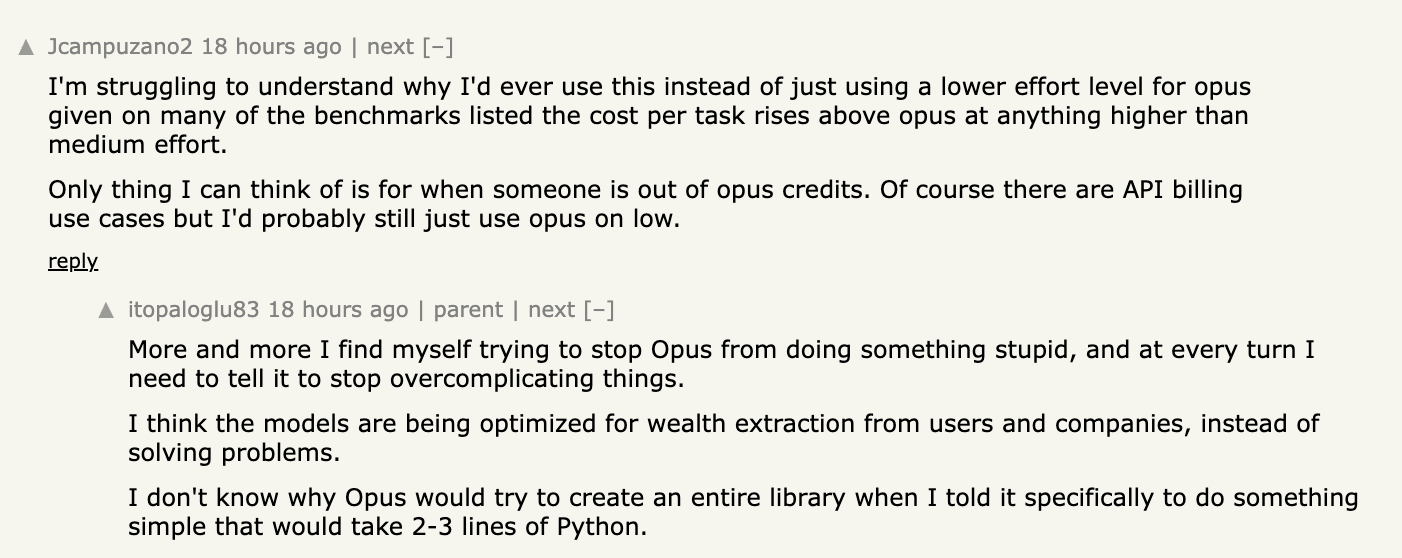
Well... that is a fair question.
On Reddit, another user said the model felt worse than 4.6, mainly because of that second guessing.
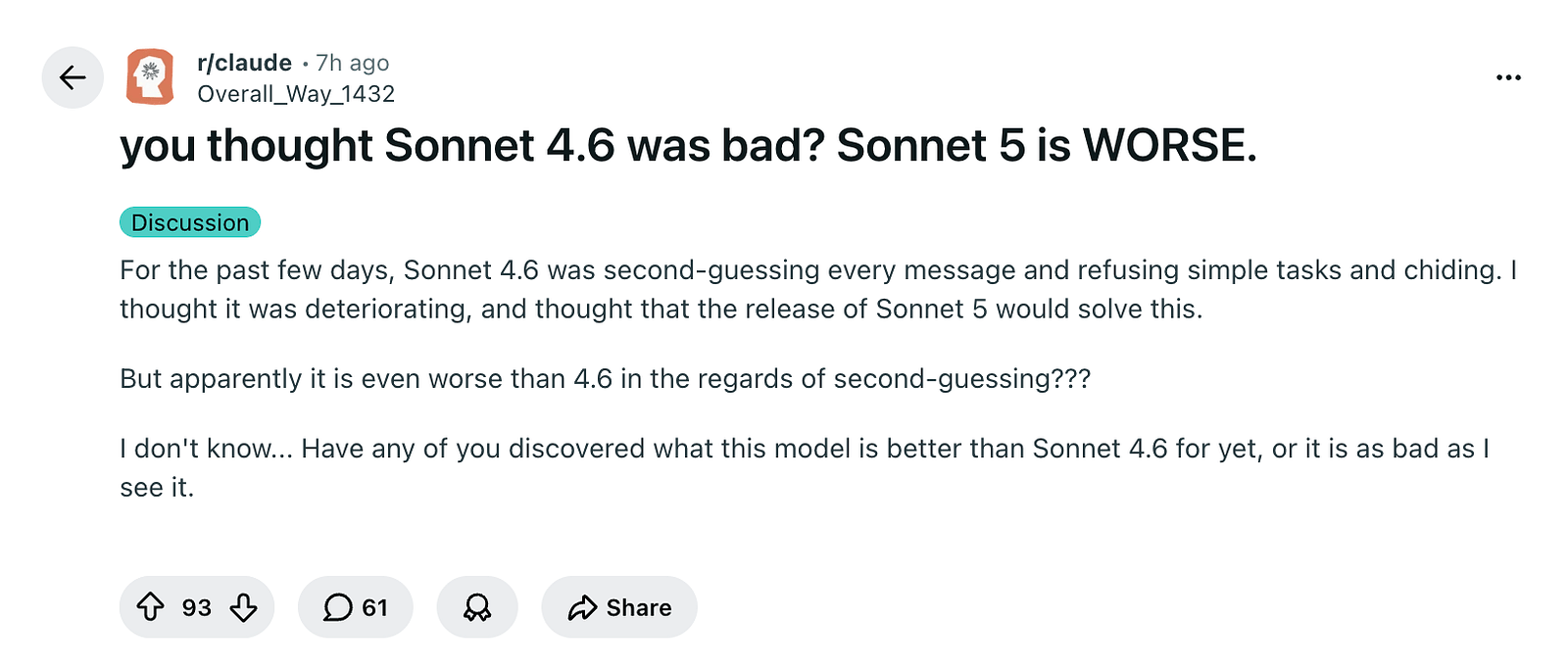
For long coding jobs, it can help. A model that catches its own mistakes, updates its plan, and runs extra checks is usually better than one that rushes to a confident answer.
But for small edits or simple writing tasks, that same behavior can feel like overthinking.
5 Technical and Behavioral Changes to Sonnet 5


Don't miss what's next in AI
Join 300,000+ engineers and researchers who get the signal, not the noise.
- Full access to in-depth AI research breakdowns
- Be the first to know what's trending before it hits mainstream
- Daily curated papers, repos, and industry moves