



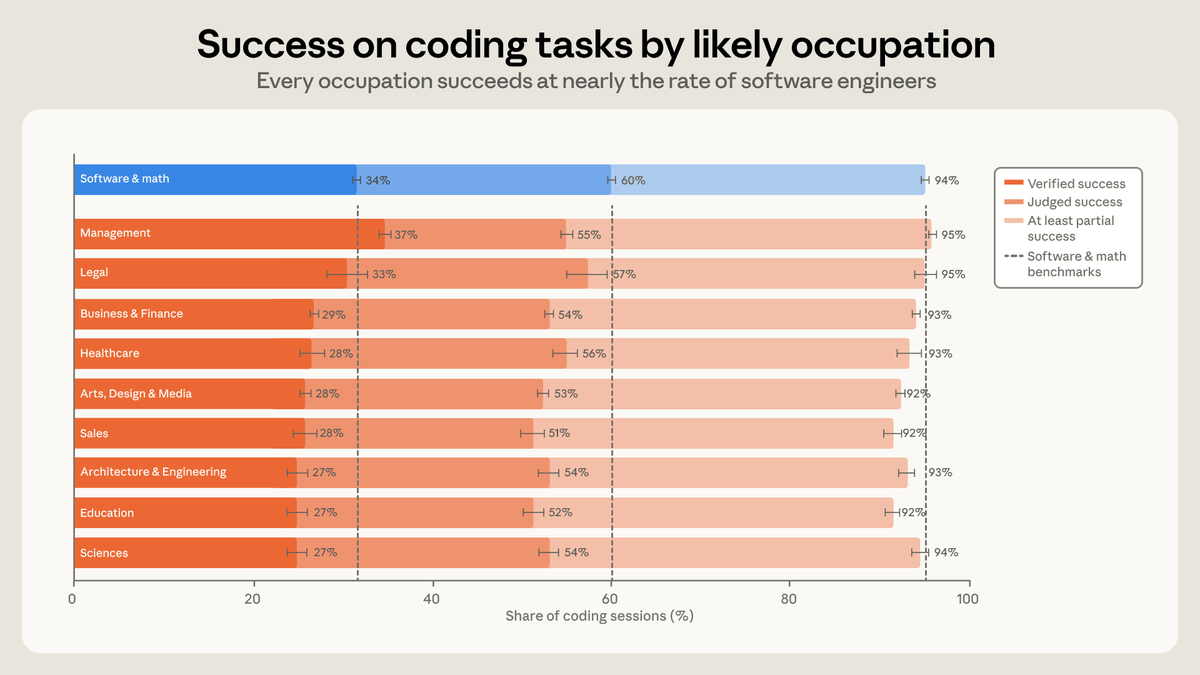
Anthropic has published a new economic research paper studying how Claude Code is actually being used in the wild -- and the findings challenge some core assumptions about who benefits from AI coding tools. The headline result: your domain knowledge matters far more than your ability to write code.
The study, authored by Zoe Hitzig, Maxim Massenkoff, Eva Lyubich, Ryan Heller, and Peter McCrory, is built on a privacy-preserving analysis of roughly 400,000 interactive Claude Code sessions from about 235,000 users between October 2025 and April 2026. It's the latest output from Anthropic's ongoing Economic Index project, which tracks how AI is reshaping knowledge work in real time.
What people actually do with Claude Code
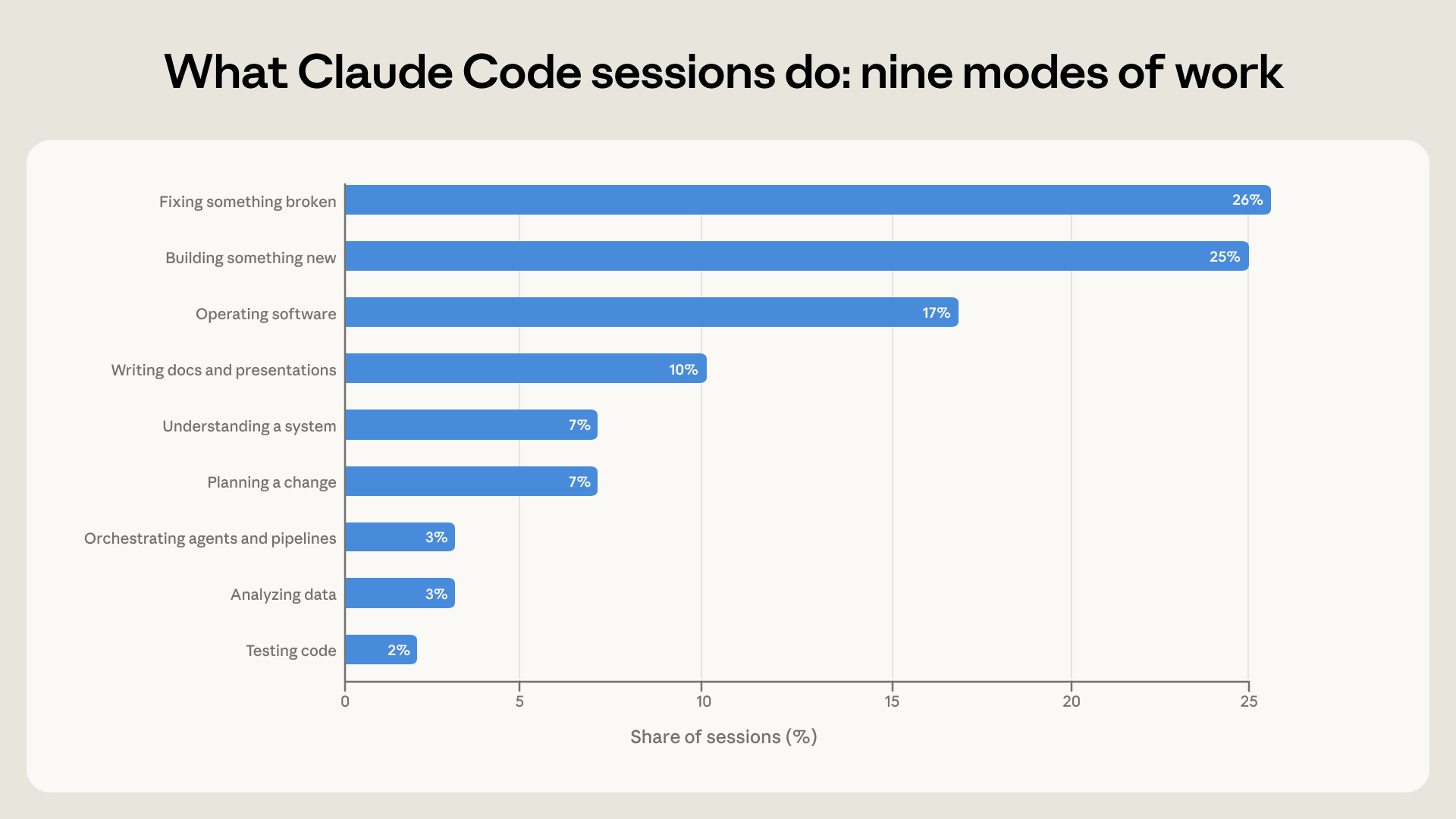
The research classifies every session into one of nine distinct work modes -- the single activity that best describes what the session is trying to accomplish. The breakdown is more varied than you might expect:
- Fixing something broken: 26% of sessions
- Building something new: 25% of sessions
- Operating software (deploying, configuring, running pipelines): 17%
- Planning or exploring: 14%
- Analyzing data or writing documents: 13%
- Testing and orchestrating agents: 5%
The composition of work changed substantially over the seven months of the study. The clearest shift: the share of sessions spent fixing broken code fell from 33% to 19%. In its place, operating software grew from 14% to 21% of sessions, and writing and data analysis roughly doubled from about 10% to 20%. The tool is being used for increasingly end-to-end work, not just patching bugs.
The tasks are getting more valuable


Don't miss what's next in AI
Join 300,000+ engineers and researchers who get the signal, not the noise.
- Full access to in-depth AI research breakdowns
- Be the first to know what's trending before it hits mainstream
- Daily curated papers, repos, and industry moves